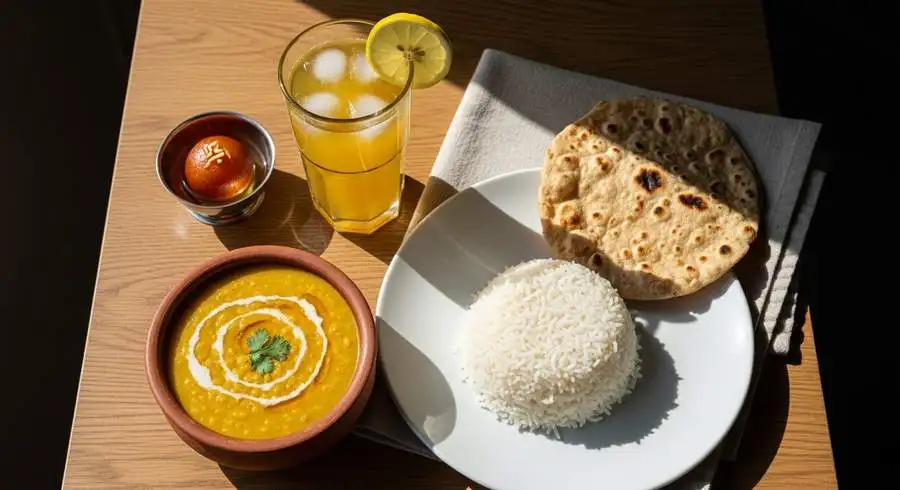
Why Two People Can Eat the Same Meal and Get Different Glucose Spikes
The idea that 'a carb is a carb' is outdated. Landmark research from the Weizmann Institute (Cell, 2015) tracked 800 people eating identical meals and found that post-meal glucose responses varied by as much as 10×. Your gut microbiome, sleep, prior meal, stress, and even the time of day change how a given food affects your blood sugar.
The single most actionable insight: your glucose response is personal. Generic glycemic index charts are averages across populations — they're a starting point, not a prescription. The only way to know which foods spike you is to measure.
The Four Biggest Glucose Spikers in Indian Kitchens
Across 12,000+ meals scanned by JForH users in India last month, four foods showed the steepest post-meal glucose curves:
- White rice (basmati) — glycemic index 58–73 depending on cooking method. Cooled-and-reheated rice spikes ~30% less because some starch converts to resistant starch.
- Idli & dosa — fermented, yes, but GI of 65–77. Pair with sambar and coconut chutney to slow absorption.
- Fruit juices (even fresh) — GI often 65–75, and no fibre to slow it down. A glass of mango juice spikes higher than a mango itself.
- Upma & poha — marketed as 'healthy breakfast' but semolina/rice flakes have GI 65–70. Adding ghee and vegetables blunts the curve.
The Western Equivalents
- Bagels, pretzels, crackers — GI 70–85. Hidden sugar-dense pastry cousins.
- Breakfast cereals with 'whole grain' on the label — many score GI 70+ despite marketing.
- Instant oatmeal vs. steel-cut — instant has GI 79, steel-cut 53. Same base ingredient, wildly different glucose impact.
- Potatoes — mashed potato GI 83, boiled-and-cooled 54. Cooling flips the curve.
The Three Levers That Actually Work
Once you know which foods spike you, three practical levers change the curve:
- Order of eating — veg first, protein second, carbs last. A 2015 Cornell study showed eating vegetables before carbs reduced post-meal glucose spikes by 37% in type 2 patients.
- Walk within 15 minutes of eating — a 10-minute stroll reduces the next-hour glucose peak by 12–22% (Sports Medicine, 2022). Your muscles pull glucose directly from blood for immediate use.
- Add acid — a tablespoon of apple cider vinegar or lemon juice with your meal reduces peak glucose by 15–20%. Yogurt, pickles, fermented foods work similarly.
How to Actually Measure Your Personal Spike
You can't optimize what you don't measure. Two options:
- Finger prick glucometer — cheapest (Rs. 800 for meter + strips). Check fasting, then 1-hour and 2-hour post-meal. Do it for the same meal on three different days.
- Continuous Glucose Monitor (CGM) — FreeStyle Libre or Dexcom style patches that stay on your arm for 14 days and sample every 5 minutes. Gold standard. Run an experiment: eat the same meal Monday without modifications, Tuesday with a walk, Wednesday with vinegar. You'll see the curves differ visibly within 3 days.
The JForH Meal Scanner Shortcut
Our AI Meal Scanner has been trained on 200,000+ foods from 26 countries including detailed Indian and Western cuisines. You point your phone at a plate, and within 3 seconds you get: calories, carbs, protein, fat, fibre, and an estimated GI score for that specific plate. It's not a replacement for a CGM — it's a decision-making tool at the point of eating, so you know whether to walk, sip vinegar water, or eat the veggies first.
The best workflow we've seen: CGM to learn your personal patterns over 14 days → Meal Scanner for daily decisions once you know what to look for. This pairing is built into our 365-day Diabetes Programme.
Bottom Line
Post-meal glucose spikes are the single biggest driver of long-term A1c and metabolic damage. But they're also the most fixable part of diabetes management because the levers are behavioral: food order, timing, a walk, an acidic side. Measure once. Adjust forever.