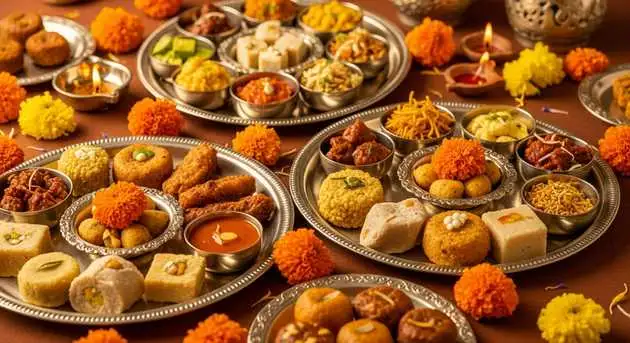
The Festival Problem
Festivals are when diabetes management breaks down. Sweets are central to every Indian celebration. Food is tied to love, family, tradition, devotion. Refusing is refusing heritage. The research confirms: A1c rises an average 0.3–0.5% in the two weeks after Diwali among diabetic patients. Eid, Christmas, and Ganesh Chaturthi show similar patterns.
The solution isn't abstinence. It's a framework that lets you participate without damage.
The Pre-Festival Week
Start 5–7 days before a major festival:
- Reduce refined carbs slightly to 'bank' your glucose budget
- Increase morning walks — build glucose-uptake capacity
- Hydrate more — festival days involve more salt and sugar
- Get one extra hour of sleep — festivals will disrupt it
Think of it like training for a marathon. You wouldn't show up cold; you taper in.
The Festival-Day Framework
Rule 1: Eat Before Sweets Arrive
A protein-rich breakfast (eggs, paneer, sprouts, dal) before the first sweet appears changes everything. You're less hungry, you choose less, and the protein blunts the first spike. Many patients skip breakfast planning to 'save calories' — this backfires and causes the biggest overeat.
Rule 2: The Two-Sweet Rule
On a festival day, limit to 2 pieces of sweets total — spread across the day, not at once. Two mithai at Diwali breakfast, then main meal, then two after dinner is manageable. Four at once is a glucose storm.
Rule 3: Which Sweets Are Least Bad
- Best: kheer with jaggery (less refined sugar), badam halwa (nuts = fat + protein), panjiri (nuts-based)
- Medium: ladoo (less dense sugar), barfi (if without heavy sugar syrup)
- Worst: gulab jamun (soaked in sugar syrup), jalebi, rasgulla, rasmalai, soaked imarti
When hosted, choose from the less-damaging group. Everyone wins.
Rule 4: Pair Sweets With Protein
A handful of almonds with ladoo. Paneer cubes before kheer. The protein slows glucose absorption. This single trick cuts the post-sweet spike by 25–35%.
Rule 5: Walk Between Rounds of Visiting
If you're visiting 3–4 homes on Diwali, walk between them. Even 10 minutes flattens the curve. Parking a block further, taking stairs, walking the kids through the colony for rangoli — all count.
Festival-Specific Playbooks
Diwali (5 days of peak danger)
- Day 1 (Dhanteras): usually mild, set your frame
- Day 3 (Diwali): the peak. 2 sweets, protein first, 30-min walk
- Day 4 (Annakut): temple food, eat small portions of many
- Day 5 (Bhai Dooj): often the forgotten-overeat day; stay disciplined
- Day 7+: reset — 3 days of clean eating to recalibrate
Eid (Ramadan fasting + Eid feast)
- Ramadan: break fast with dates (3 max) + water first, then light food, then main meal — not all at once
- Eid: portion control on sheer khurma (very high sugar), biryani (2/3 portion), kebab (good protein option)
- Pre-dawn suhoor: complex carbs + protein + fat to last through the fast
Christmas (European-style sweets)
- Christmas cake — 1 small slice, not 3
- Roast meats — your friend, high protein, low carb
- Wine — 1 glass, not 3
- Mince pies, rum balls — the ambush foods, moderate rigorously
Pongal / Onam / Sankranti
- Sweet pongal is a double-hit (rice + jaggery + ghee)
- Balance with venn (savory) pongal, sambar, vegetable curries
- Onam sadya — 24+ items, small portions of each; avoid second helpings of payasam
Ganesh Chaturthi
- Modak is the signature. 2 max. Fried modaks are worse than steamed.
- Naivedya offerings shared across family — small portions work
Karva Chauth / Teej (fasting traditions)
- Dry fast for diabetics on medication is dangerous. Modified fast (water only) with prior doctor consultation.
- Break-fast: small portion first, full meal after 30 minutes. Not everything at once.
The Family Negotiation
Indian family food culture is the real challenge. Aunties push food. Grandma makes extra. The 'just one more' is relentless. Strategies that work:
- Take a small portion on your plate immediately — visible commitment
- Hold a plate with already-eaten food — signals you're engaged
- Take a piece to 'try later' (quietly don't) — face-saving
- If asked directly: 'My doctor is tracking my sugar right now — maybe next week' — specific beats vague
- Bring a non-sweet gift — redirect the 'give-love-through-food' pattern
The CGM During Festivals
If you wear a CGM, festivals are eye-opening. Seeing the graph spike and crash in real-time during a sweet sitting is behaviour-changing for most patients. Many who start a CGM during Diwali week become disciplined for years afterward. The visibility of what's happening in your body is powerful.
Post-Festival Recovery
After the festival week, spend 3 days on:
- Intermittent 14:10 fasting (eat in a 10-hour window)
- Lower-carb meals (green vegetables + protein focus)
- 2 extra walks per day
- Extra hydration — festivals dehydrate
- Magnesium supplementation — often depleted after sugar binge
Three disciplined days usually reset baseline glucose. Don't skip them.
The Mental Framing
Think of festivals like a big meal you knew was coming. You wouldn't skip dinner because you had a big lunch — you'd eat a smaller dinner, walk more, and return to normal the next day. Festivals are the same: not a catastrophe, not a free-for-all, but a managed event.
The Backup Plan
If festival week genuinely goes off-rails — it happens — don't cascade into a full 'I'll start fresh in January' slide. Test your glucose the morning after. Look at the number without judgment. Restart your framework from the next meal. A single elevated day matters less than a single week of giving up.
The Programme Perspective
Our 365-day Diabetes Programme includes festival-specific protocols for Diwali, Eid, Christmas, and regional festivals. CGM patterns during festivals are reviewed with your specialist so you learn your personal response to festival food. By year 2, most patients navigate festivals without any A1c impact at all. It's learnable. It's doable. And you don't have to sit out the celebrations.