Why Indian Meal Advice Mostly Gets It Wrong
Most diabetes diet guides are Western-centric. They tell Indians to 'cut carbs' without explaining that a typical Indian diet is 60–70% carbs by design. Generic glycemic index tables don't include idli, upma, bhel puri, or biryani. The result: patients either abandon their cuisine (unsustainable) or ignore the advice (unsafe).
This guide is different. We analysed the 10 most-scanned meals by JForH users in India, and here's what we found.
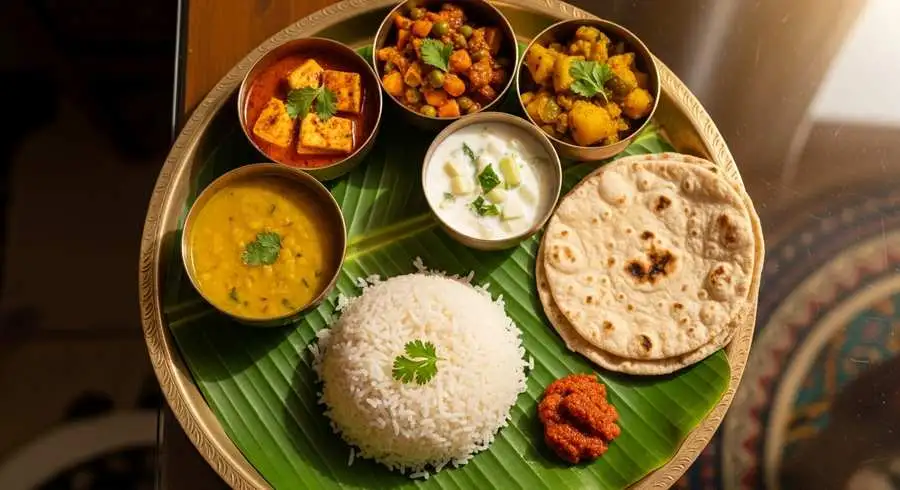
1. South Indian Thali
Typical composition: steamed rice, dal, 2 vegetable curries, rasam, curd, pickle, 1 roti.
GI: 58 (meal composite) · Calories: ~485 · Carbs: 62g
Better than it looks. The dal (GI 32), fibre from vegetables, and fat from ghee all blunt the rice spike. Swap to lower GI: replace 50% of rice with cauliflower rice, add a tablespoon of hemp or flax seeds to dal.
2. Dosa with Chutney
Typical composition: one large dosa, coconut chutney, sambar, filter coffee (with sugar).
GI: 70 (high) · Calories: ~380 · Carbs: 52g
Plain dosa is fermented but still high GI. Ghee helps slightly. The real spike is often the sweet filter coffee. Fix: ask for 2 extra sambars (beans lower GI of the meal), eat coconut chutney first (fat+fibre), skip or unsweeten coffee.
3. Rajma Chawal
GI: 48 (well-composed) · Calories: 520 · Carbs: 68g
A beautifully balanced plate. Rajma (kidney beans) is the lowest-GI Indian staple at 28, and its fibre slows rice absorption. Rajma + rice eaten together has a composite GI significantly below rice alone. Keep as is — this is a gold-standard Indian meal for glucose.
4. Biryani
GI: 63 · Calories: ~620 · Carbs: 74g
Basmati has a lower GI than white rice (58 vs 73). The meat, ghee, and spices all slow glucose. But portion size is the killer. A typical restaurant plate is 2× what one person needs. Fix: eat with double raita, add kachumber salad, stop at ¾ of plate.
5. Poha
GI: 65 · Calories: ~280 · Carbs: 48g
Marketed as 'healthy breakfast' but flattened rice is high GI. Adding peanuts (protein + fat) and lemon (acid) reduces spike by ~15%. Fix: add 2 tablespoons roasted chana or 1 boiled egg.
6. Chapati + Sabzi
GI: 52 · Calories: ~420 · Carbs: 56g
Whole wheat chapati is GI 62, vegetable sabzi 40–55. Good balance. If you replace whole wheat with millet (bajra, jowar) chapati, GI drops to 40–45 — a massive improvement for diabetics with minimal taste difference.
7. Chole Bhature
GI: 68 · Calories: 720 · Carbs: 82g
Chole (chickpeas) alone is GI 28 — excellent. But deep-fried bhatura of refined flour is GI 75 and calorie-dense. Swap: chole + 2 rotis instead of bhature. Same taste, half the glucose impact.
8. Masala Dosa
GI: 67 · Calories: 460 · Carbs: 68g
Adding the potato masala inside a dosa makes it a high-GI double whammy. Swap: paneer masala dosa (protein slows spike) or just plain dosa with extra sambar.
9. Idli Sambar
GI: 69 · Calories: 320 · Carbs: 56g
Idlis are fermented (good) and steamed (good) but still high GI. Sambar adds protein and fibre. Fix: eat with 2 boiled eggs or drizzled with flax-ghee mix for breakfast.
10. Pav Bhaji
GI: 72 · Calories: 680 · Carbs: 78g
Pav (refined white bread) is the main problem. Swap: bhaji with whole wheat roti, or cut pav quantity in half. Bhaji itself is vegetable-heavy and not the issue.
The Six Lever Rule for Indian Meals
Regardless of which meal, these six levers reduce post-meal spike:
- Add protein — 100g paneer, 2 eggs, or Dal gives ~25g protein that flattens the glucose curve
- Add ghee — 1 tsp ghee slows carb digestion 20–30%
- Eat vegetables first — the 'vegetable appetizer' trick works in Indian kitchens too
- Swap basmati with small millets — bajra, ragi, kodo, foxtail all have GI 40–50 vs 73 for white rice
- Add curd — probiotics improve insulin sensitivity over 8 weeks
- 10-minute walk post-meal — drops peak glucose by 12–22%
The Ayurvedic Perspective
Traditional Indian food science (Ayurveda) recommended the sequence: salty/sour/sweet first, then main meal, ending with bitter/astringent. Modern glucose research largely validates this — kachumber first, meal centre, bitter gourd at end. Siddha medicine similarly prescribed karela (bitter gourd), methi, jamun, and neem for insulin sensitivity — all now backed by RCT evidence.
The Tool
Every meal above was analysed by the JForH Meal Scanner — point your phone at your thali and in 3 seconds get calories, carbs, protein, and an estimated GI score personalised for your cuisine. Free first scan, no credit card. Works for every state cuisine from Rajasthan to Kerala.