The Short Answer
If you have type 2 diabetes and your A1C is above 7%, yes — one 14-day CGM session per quarter almost always pays for itself in better decisions and lower A1C. If you're prediabetic or a biohacker curious about your glucose, a one-time 14-day experiment is genuinely eye-opening. If you're metabolically healthy with no family history and no symptoms, it's probably overkill unless you enjoy data.
What a CGM Actually Shows
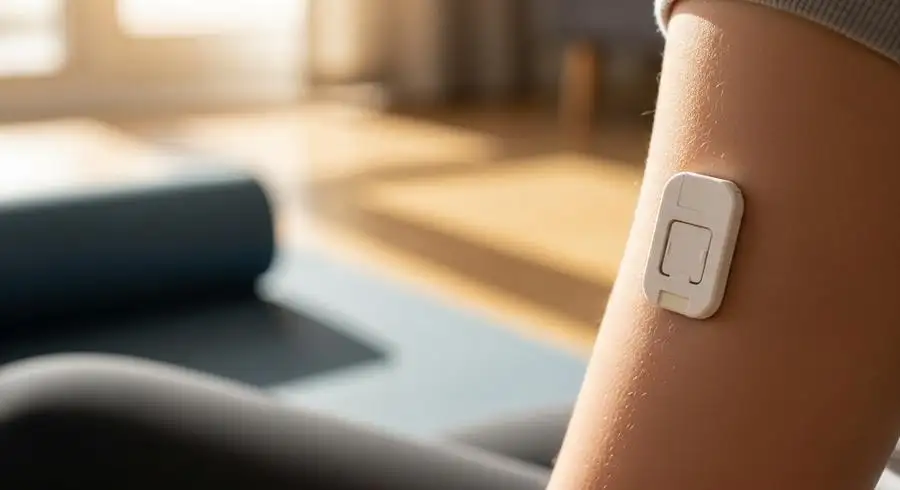
A CGM is a small sensor (about the size of a coin) that sticks to your upper arm and reads interstitial glucose every 1–5 minutes for 10–14 days. Brands include Abbott FreeStyle Libre, Dexcom G7, and in India the BeatO CGM and Sugar.Fit sensor.
You get: a continuous line graph of your glucose instead of 4 finger-prick snapshots. Suddenly visible patterns:
- The 'healthy' oatmeal breakfast that actually spikes you to 180 mg/dL
- The 3 AM dawn phenomenon rise caused by cortisol
- The post-dinner spike that disappears when you walk for 10 minutes
- The stress spike during your 4 PM meeting
Pricing Reality in India (2026)
- Abbott FreeStyle Libre (14 days) — around Rs. 1,200–1,500 per sensor
- Dexcom G7 (10 days) — Rs. 3,000–4,000 per sensor (limited availability)
- BeatO CGM / Sugar.Fit (14 days) — bundled with programmes starting Rs. 4,999–36,000/year
In the US, Abbott Lingo and Dexcom Stelo are now sold over the counter for $49–89 per 14-day sensor — no prescription needed.
Who Gets the Biggest Return
1. Type 2 diabetics on oral medications (highest ROI)
Clinical studies (Cell Metabolism, 2023) show A1C drops of 0.5–1.1% within 3 months of starting intermittent CGM use. At 1% reduction, that's a 21% reduction in diabetes-related mortality risk. No pill can match this ROI.
2. Prediabetics
A 14-day CGM experiment reveals whether your glucose is mostly well-controlled with occasional spikes (behavioral fix) or chronically elevated baseline (needs medical intervention). Most prediabetics don't know which category they're in.
3. People on GLP-1 drugs (Ozempic, Mounjaro, Wegovy)
GLP-1s lower glucose variably. CGM shows whether dose is right.
4. Athletes optimising performance
Elite endurance athletes now use CGMs to dial in fueling strategy. Reactive hypoglycaemia during long rides is a top-3 DNF cause and is invisible without CGM.
5. Biohackers and the 'worried well'
Honest take: a 14-day trial teaches you a lot about your body. Continuous year-round CGM use for a healthy non-diabetic is overkill and sometimes anxiety-inducing.
The Four Insights Almost Every First-Time User Gets
- Carbs are not the only trigger — stress, poor sleep, and even black coffee can spike glucose.
- Post-meal walks are magic — 10 minutes after eating, your curve flattens visibly.
- Alcohol tanks overnight glucose — then spikes it during morning meals. Most people have never seen this.
- The 'dessert with a meal' trick works — glucose rises less than dessert eaten alone because fat/protein slow absorption.
What CGMs Don't Show
- Insulin levels (need separate lab)
- C-peptide (pancreas function)
- Inflammation markers (hs-CRP, HOMA-IR)
- Nutrient deficiencies (B12, magnesium — common in diabetics)
A CGM tells you what's happening. It doesn't tell you why. That's why we pair CGM data with quarterly 70+ parameter blood panels in our Diabetes Programme.
The Time-In-Range Metric
CGMs introduced a new primary metric: Time in Range (TIR) — the percentage of time your glucose stayed between 70–180 mg/dL. Aim for >70% TIR. Research shows TIR predicts complications as well as A1C does, but is more actionable because you see when you fell out of range.
Common First-Week Mistakes
- Checking every 5 minutes — creates anxiety, doesn't help
- Reacting to a single spike — wait for a pattern across 3+ occurrences
- Ignoring the dawn phenomenon — morning rise is often cortisol, not food
- Skipping the food log — a CGM without a meal log is just numbers without causes
Our Recommendation
Do one 14-day CGM trial. Log every meal using the JForH Meal Scanner. At the end of 2 weeks, you'll have identified the 3–5 foods that spike YOU (not averages), the best time of day for your workouts, and whether your glucose is a behavioral problem or a medical one. That's typically enough signal to change course. If you're type 2, repeat quarterly. If you're prediabetic, annually.