The Stages of a Diabetes Programme: What Actually Happens, Week by Week
Programme · 3 · August 7, 2026
Why a pathway beats a promise
The programmes that work are the ones that turn a big, vague goal ("get my diabetes under control") into a sequence of small, concrete steps with a clear reason for each. Below is the honest shape of a CGM-guided pathway — not a magic funnel, just good care in order.
Stage 1–2: Assessment and your sensor
Assessment first. Before any plan, a programme needs your real starting point: your history, current medications, recent labs where available, and individualised targets set with a clinician (the ADA and NICE both insist targets be personal, not one-size-fits-all). Then the CGM. A continuous glucose monitor ships to you and, once applied, begins showing how your blood sugar actually behaves — the raw material everything else is built on. Guesswork ends where measurement begins.
Stage 3–4: Learning your patterns, then coaching
Learning. As you log meals and wear the sensor, the food-response engine builds a picture of how your body handles your meals — starting from population-level estimates and narrowing to you over the first weeks. Coaching. That personal data feeds human coaching and timely nudges: which breakfast keeps you in range, when a short post-meal walk helps most, where a small swap pays off. Advice stops being generic and starts being about your curves.
Stage 5: Review — and honest course-correction
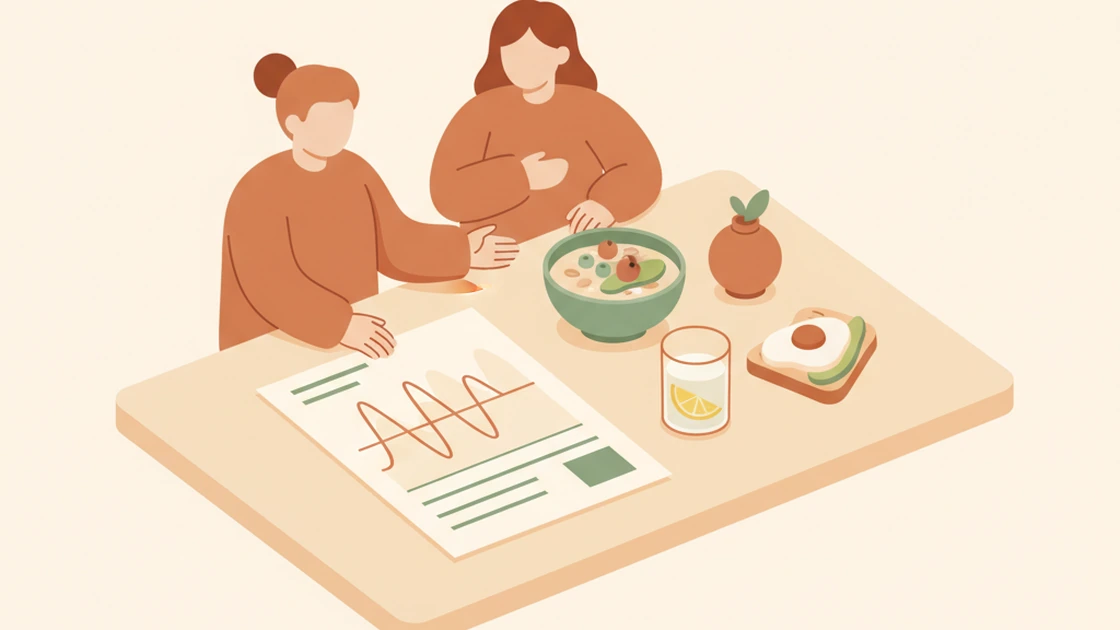
Every good pathway loops back. Periodic review checks your trajectory against your individualised targets, updates the plan, and — crucially — is honest when something is not working, rather than declaring victory. Your Metabolic Twin summarises the picture from recognised clinical measures, each labelled by whether it is actually measured or still needs a test, and always as informational rather than diagnostic. Progress you can see, corrected as you go.
Related reading: the programme pathway · a CGM-guided programme you can do from anywhere · an evidence-based diabetes programme · what a guided diabetes journey feels like.
This article is for general education. It does not replace medical advice, diagnosis, or treatment from a qualified healthcare professional. Type 2 diabetes remission is possible for some people but is not guaranteed and is not a cure; never start, stop, or change medication — especially insulin or other glucose-lowering drugs — without your doctor.